
Commercial Roof Seam Failure Repair in Arvada, CO
Inspect open commercial roof seams near Arvada. Identify the system, test adjacent material, and map the repair boundary before water reaches occupied space.
Request a roof assessment. Tell us about the building.
Send the address and what you are seeing on the roof or inside the building. We will set a time to walk the roof and talk through the next step.
Locate the open lap before water travels
An open lap can admit water before the interior shows a stain. Mark the seam, roof section, and direction of travel first. We inspect the joint, adjacent sheet, fasteners, and underlying surface. If water is active, temporary protection comes before a permanent seam repair.
Gold Strike Station serves Arvada's east side on the G Line. It is a regional reference, not a roof condition. At a property near this corridor, the address and assembly determine the inspection route and repair method.
Identify the seam that opened
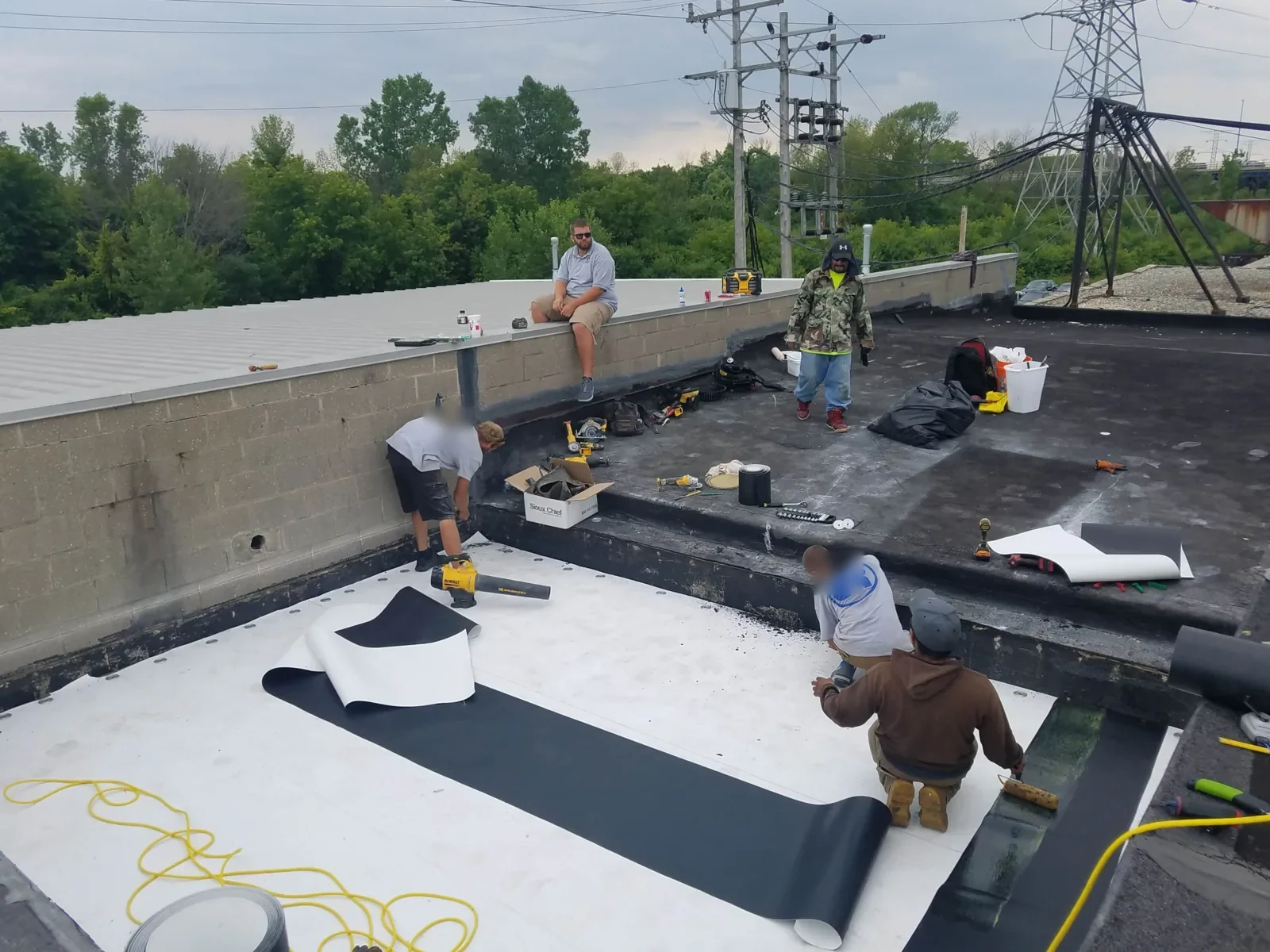
Single-ply membranes can separate at a welded lap, peel at an edge, or split beside a patch. Metal roofs may open at panel sidelaps, end laps, ridge joints, or fastener lines. Built-up surfaces can crack at a transition. Identify the material and attachment before selecting a repair method.
Check whether the seam opening is clean, contaminated, stretched, or surrounded by brittle material. Probe only with suitable tools and within the owner's access rules. Photograph the joint before cleaning or applying a patch. A membrane damage inspection can help distinguish a seam separation from a separate puncture.
Look at nearby flashing, curbs, and drains for other openings. Water can enter at one detail and travel toward another. A flashing review records adjacent transitions that may contribute to the leak. Do not widen the repair boundary until the surrounding system is inspected.
Record seam direction, nearby fasteners, and any change in substrate height. On a sheet membrane, check whether the lap is clean enough for a compatible weld or needs removal back to sound material. On metal, inspect whether panels have shifted or fasteners lost grip. A surface bead can hide those differences, so capture the joint before applying repair material.
Trace the leak beyond the visible split
Interior water may show up several feet from the failed seam. Mark the room and ceiling location, then compare it with roof slope, framing, drains, and penetrations. A roof leak assessment can document the likely entry point and any concealed questions.
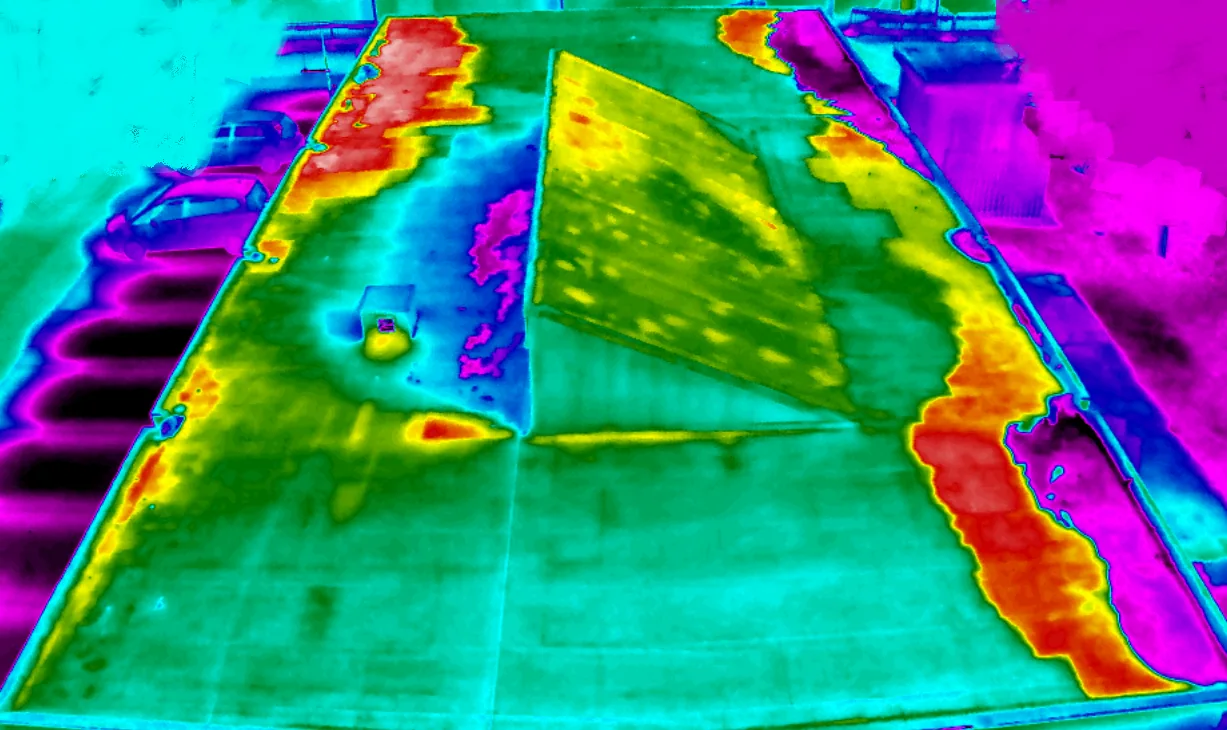
Moisture beneath the membrane can weaken a repair bond. Inspect the surface and substrate around the split. If material is wet or detached, map the boundary before cutting. Test openings should answer a defined question and include a plan to restore the assembly.
Previous patches can mask the original joint. Identify patch edges and any fresh separation beside them. Record the repair material if known. A recurring seam failure may involve movement, incompatible materials, poor attachment, or an underlying support issue. The report should separate confirmed observations from the cause still being evaluated.
Match repair materials to site conditions
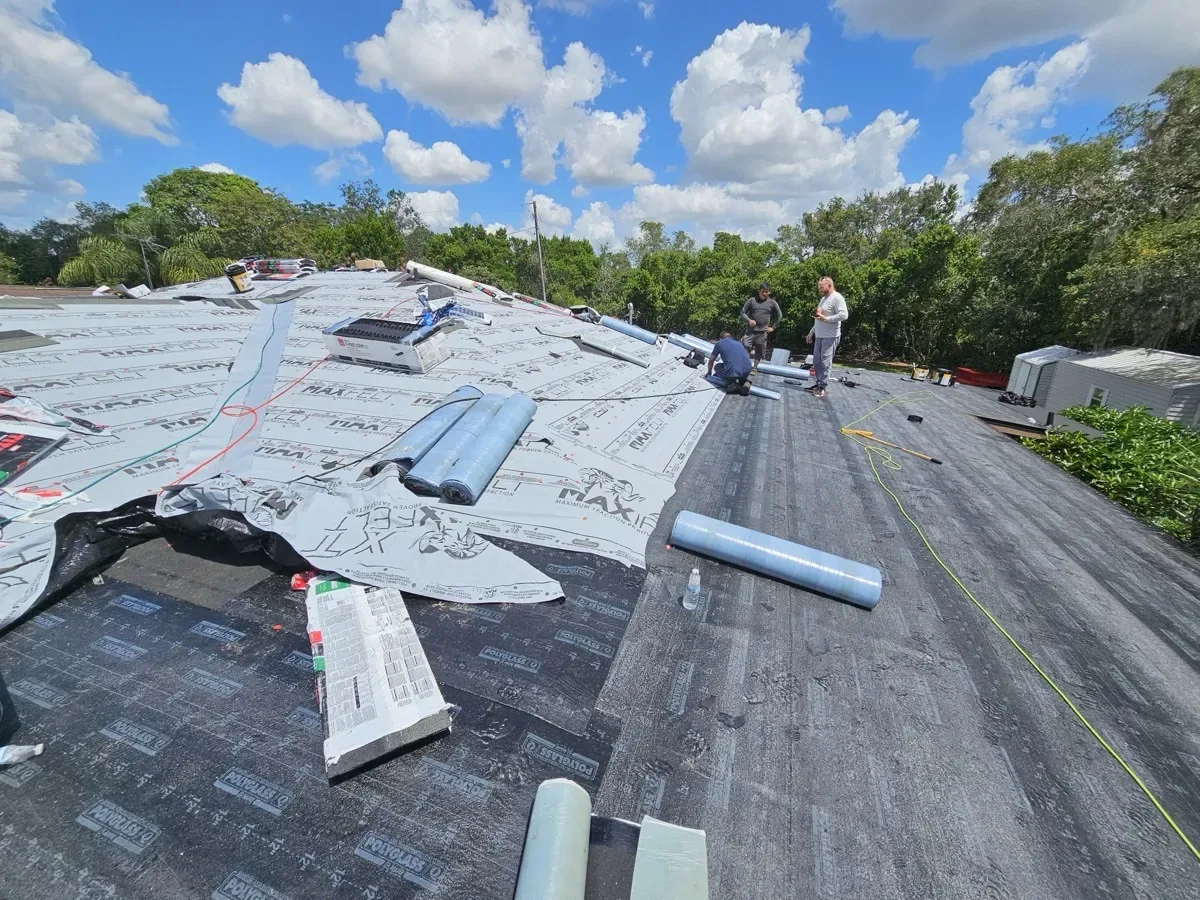
Temperature, surface moisture, wind, and cleanliness affect repair work. Welded membrane patches need sound, prepared material. Metal seams may need fastener or panel correction before sealant. Coating over an unstable joint can conceal the movement without correcting it. Use a repair detail compatible with the existing system.
Arvada's May 2017 supercell brought hail, wind, rain, and flooding to western suburbs. A current storm report may lead to seam checks, but the historic event cannot diagnose an existing roof. Record date, location, and current surface condition. A wind damage review can also check edge restraint and panel attachment.
Denver International Airport's 47-inch seasonal snowfall normal for 1991-2020 is a regional planning reference. It does not set a roof load. If a seam opening occurs near a drain or low area, document water flow and snow or ice obstruction separately from joint condition.
Ready to talk about your roof?
Repair the joint and verify the tie-in
A small, clean opening may permit a localized patch when adjacent material remains sound. A long split, repeated separation, wet insulation, or compromised attachment can require broader removal. We note preparation, patch size, lap direction, termination, and inspection point. A repair estimate should identify each roof section and the work limit.
After repair, inspect the joint and the tie-in surfaces. Testing method depends on the roof system and project requirements. Record the result, date, materials, and any limitation. If the owner requests a warranty or manufacturer review, follow the project's actual terms and submission process.
Cost and timing depend on access, seam length, system, wet material, substrate, weather, and surrounding equipment. If concealed conditions extend the work, protect the opening and request approval. Do not treat additional removal as included unless the scope says so.
For a large roof, divide repairs by grid line or roof-plan section. This makes later inspection repeatable and helps distinguish completed joints from areas still awaiting access. Note the seam length, preparation method, material lot if required by the project, and conditions during installation. The owner can then compare future movement against the original repair record.
Keep seam findings tied to the roof map
Olde Town Arvada includes office, retail, residential, and mixed-use buildings with historic resources. Some exterior alterations require a Certificate of Compliance. That review may matter when visible roof details change, not for every seam patch. A service visit in Olde Town starts with the property and the affected roof section.
Closeout photos should show the seam before work, prepared area, completed tie-in, and nearby drain or curb. Add the date and roof-zone label. If another seam remains under observation, note its location and whether it was tested. That gives the facilities team a clear follow-up route.
Send the building address, roof plan, leak report, storm date, and access instructions. We will identify the seam type and define a repair boundary. Emergency protection is available around the clock when an open joint is admitting water.
More roof damage repair
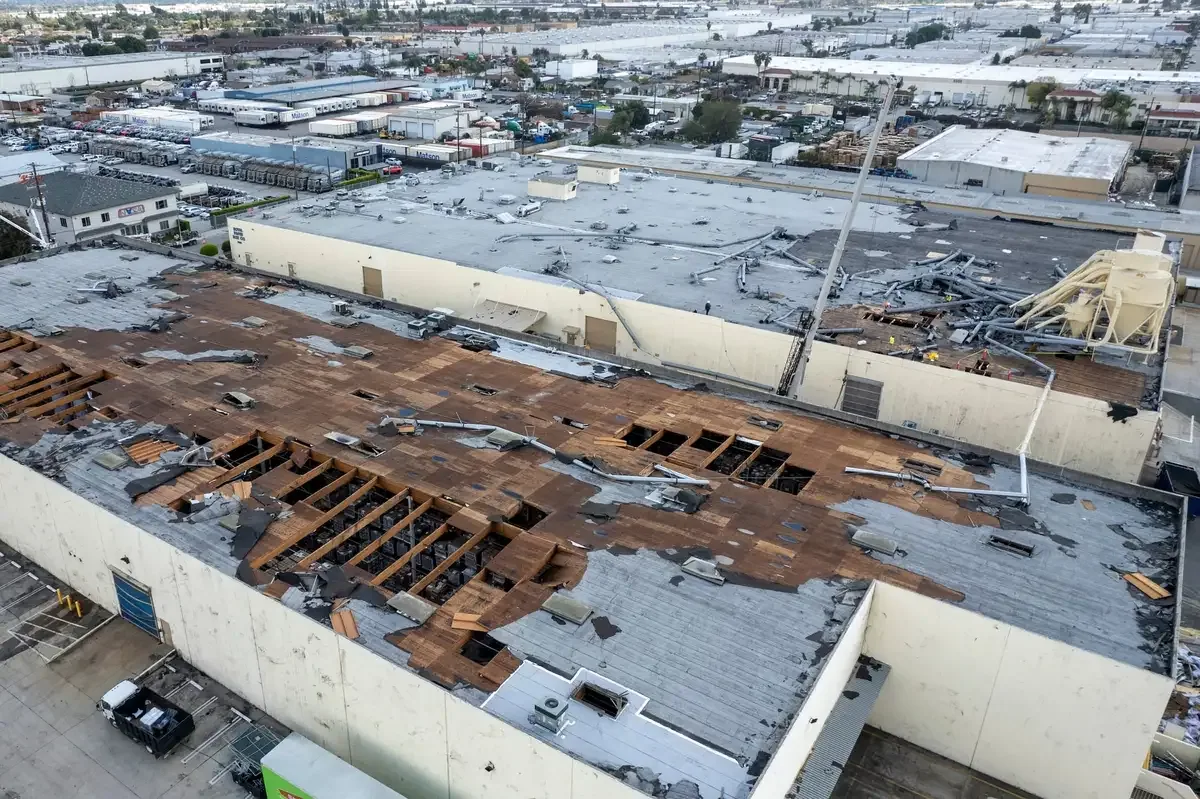
Other work our crews handle on Arvada roofs. See all roof damage repair.
Commercial Roof Membrane Puncture Repair
Locate and repair commercial membrane punctures near Arvada. Trace water, inspect adjacent material, and document traffic or maintenance damage by roof zone.
Commercial Roof Flashing Failure Repair
Find and repair failed commercial roof flashing near Arvada. Inspect walls, curbs, drains, and edge transitions before defining a leak repair boundary.
Commercial Wind Damage Roof Repair
Inspect commercial roofs near Arvada after high winds. Map lifted edges, loose panels, open seams, and active leaks before setting protection or repairs.
Commercial Ponding Water Roof Repair
Find why commercial roof water remains after rain in Arvada. Inspect drains, slope, membrane, and structural indicators before selecting a correction.
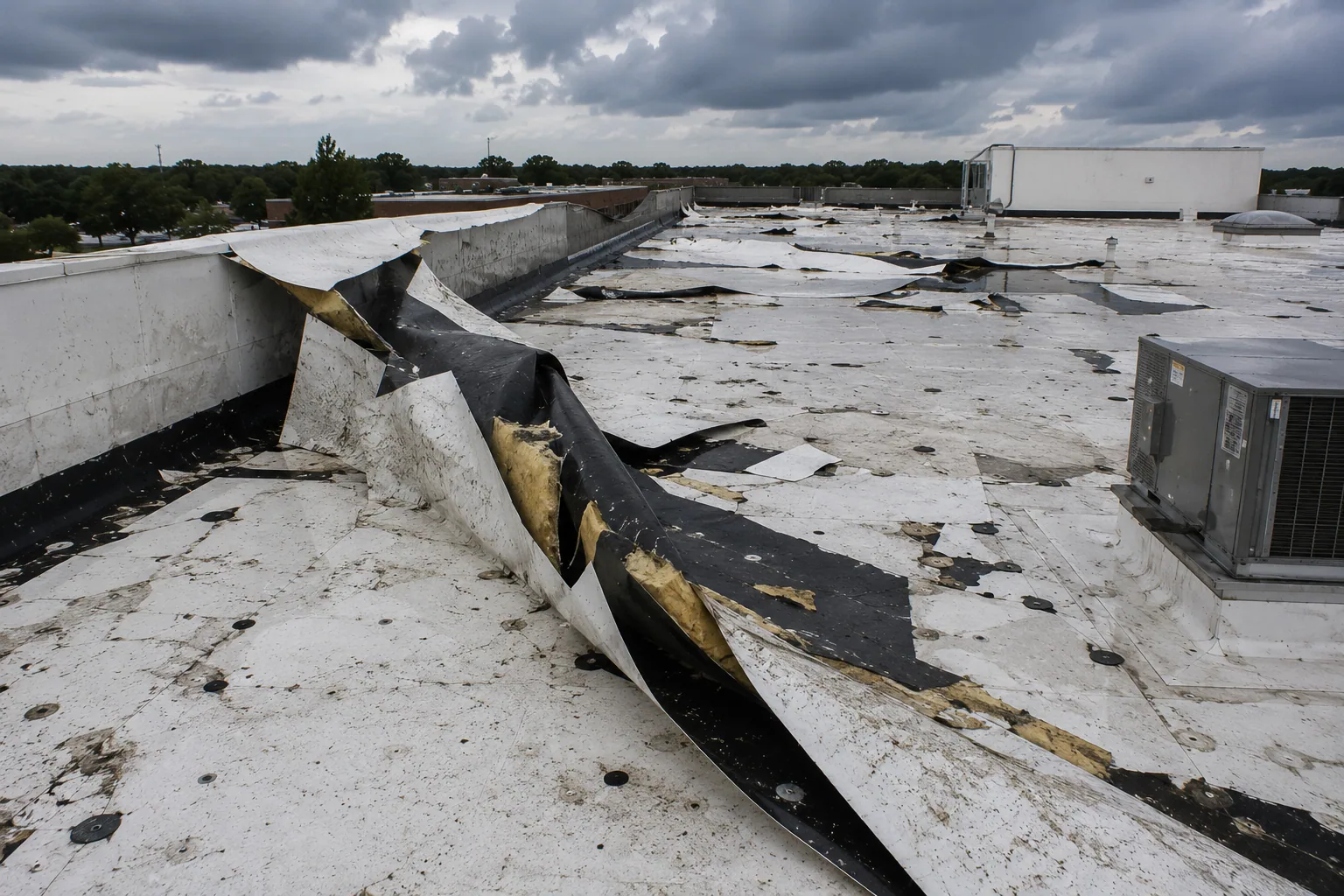
Commercial Roof Repair After Fire Damage
Inspect roofs after fire near Arvada. Map heat exposure, openings, smoke residue, and water entry before planning temporary cover or permanent repair.
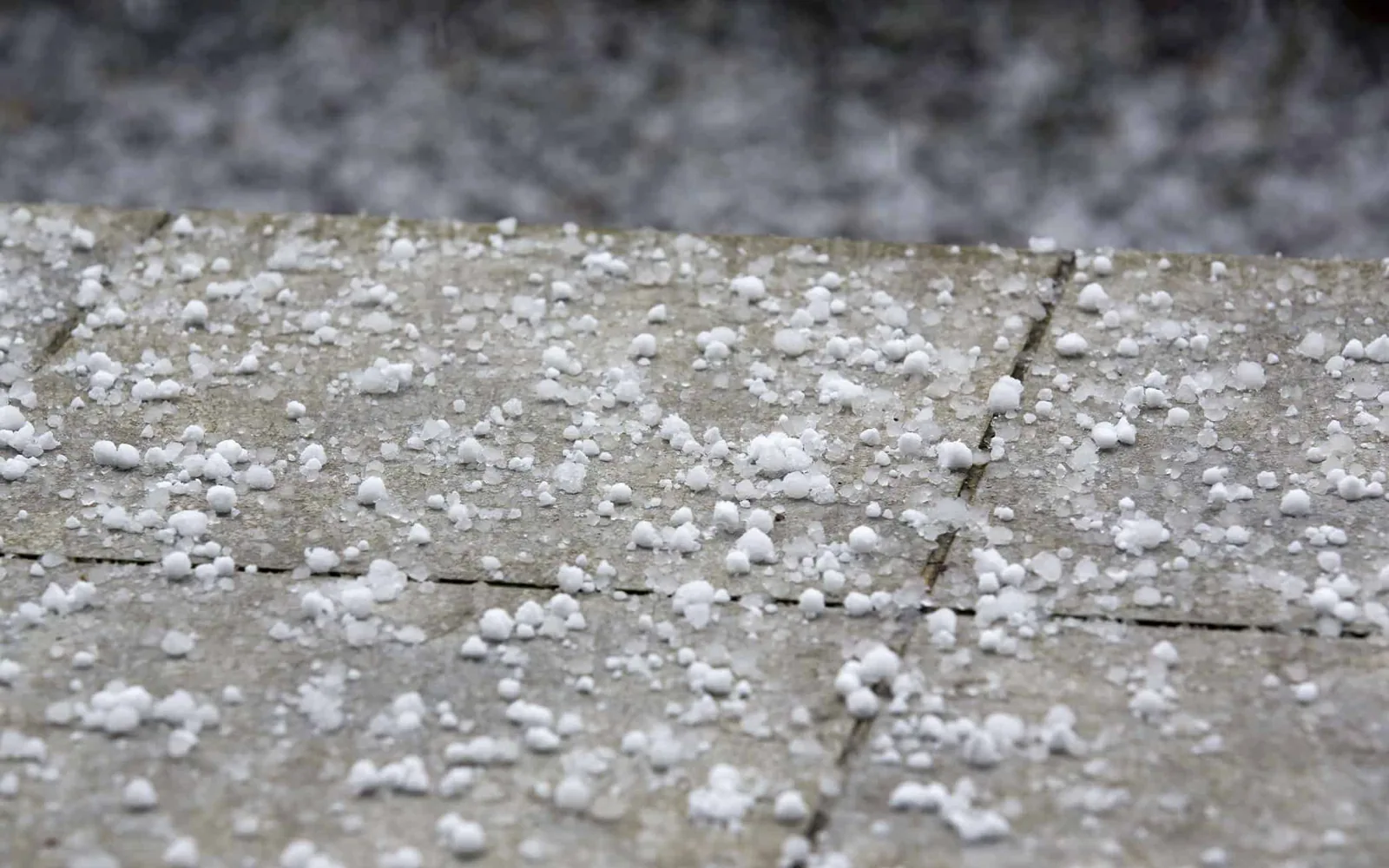
Commercial Hail Damage Roof Repair
Document commercial hail damage near Arvada with dated photos, mapped impact areas, and separate repair options. Inspect edges, seams, and interior reports.
Serving Arvada and the west Denver metro.
Our crews work on commercial roofs across Arvada, Wheat Ridge, Lakewood, Westminster and Broomfield. Find your area below.
Arvada
Service Areas
Questions about Commercial Roof Seam Failure Repair
Can a seam be patched without replacing the roof?+
Often a localized opening can be repaired when adjacent material and attachment remain sound. We inspect the seam length, substrate, moisture, and prior patches first. Broader conditions can change the scope.
Why does a seam reopen after repair?+
Movement, poor bond, contamination, incompatible material, or an unresolved substrate issue can contribute. We inspect the repair edge and surrounding assembly before repeating the same detail. The report should identify any remaining cause question.
How can I tell a seam split from a puncture?+
A seam opening follows a lap or joint, while a puncture passes through a sheet away from its joint. Both need inspection of nearby material and moisture. Photos and a roof map help keep the repair location precise.
What should be recorded after the seam is repaired?+
Capture the prepared joint, patch limits, material, tie-in, test result if required, and date. Mark the same roof plan used for the inspection. List nearby areas left under observation separately.
Have a question? Call us at 555-555-5555 or send us a message.
Locate the open lap before water travels
Share the property address, roof map, room report, storm date, and access instructions. We will inspect the seam and document the repair boundary and next decision.